In short: Cost per barrel and cost of goods at dump represent your total financial investment in aged spirits. This calculation includes raw materials, labor, and cooperage at fill, plus holding costs and evaporation losses over time. Accurately tracking these factors ensures profitable pricing when barrels are finally emptied.
Understanding your cost per barrel and cost of goods at dump is the single most important financial challenge for any distillery producing aged brown spirits. When you tie up hundreds of thousands of dollars in a rickhouse for years at a time, you need to know exactly how much each dumped bottle truly costs to produce. This guide breaks down how to track these expenses accurately from the still to the bottling line, helping you maintain profitability as your distillery grows.
What goes into your initial cost per barrel?
The moment you fill a barrel, it already carries a significant financial burden. The initial cost per barrel is not just the price of the liquid. It includes the cumulative cost of all raw materials, labor, utilities, and the physical cooperage.
First, you must account for your grain bill, yeast, and enzymes. Then, add the utility costs of running your boiler, chiller, and pumps during the mashing and distillation process. Labor is another major factor. You must calculate the hourly wages spent on milling, mashing, fermenting, distilling, and barreling the spirit.
Finally, there is the cost of the barrel itself. For many craft distilleries, a new charred 53-gallon virgin white oak barrel is one of the most expensive single line items in the production process. The barrel is a consumable asset that must be rolled into the final cost of the liquid it holds. This heavy upfront capital requirement is why experienced operators frequently note that it takes a minimum of $500,000 in startup capital just to get a distillery out of the red. Proper distillery cost accounting is critical to track these expenses from the raw ingredient stage to the barrel fill date.
How does barrel entry proof change your production costs?
The proof at which you enter your spirit into the barrel dramatically impacts your total cooperage costs and your final product flavor. According to Title 27 of the Code of Federal Regulations, the maximum legal barrel entry proof for bourbon is 125 proof, which equates to 62.5 percent alcohol by volume.
However, distillers rarely fill exactly at 125 proof. Many prefer to barrel in the 110 to 120 proof range. Over a long maturation period, water and alcohol transpire through the wood at roughly equal rates in certain climates, which helps keep the proof relatively stable. Higher entry proofs can lead to greater alcohol loss over time.
Lower entry proofs, such as 100 or 110 proof, pull more water-soluble wood sugars and vanilla notes from the oak. While this can create a highly desirable flavor profile, it requires more water in the barrel. Adding more water means you need more physical barrels to hold the same total volume of pure alcohol. This directly drives up your initial cost per barrel because you are buying more oak to store your spirits. Conversely, filling at a higher proof requires fewer barrels, but it may extract more tannins and result in a spicier, heavier oak character.
How do barrel size and aging time affect your finances?
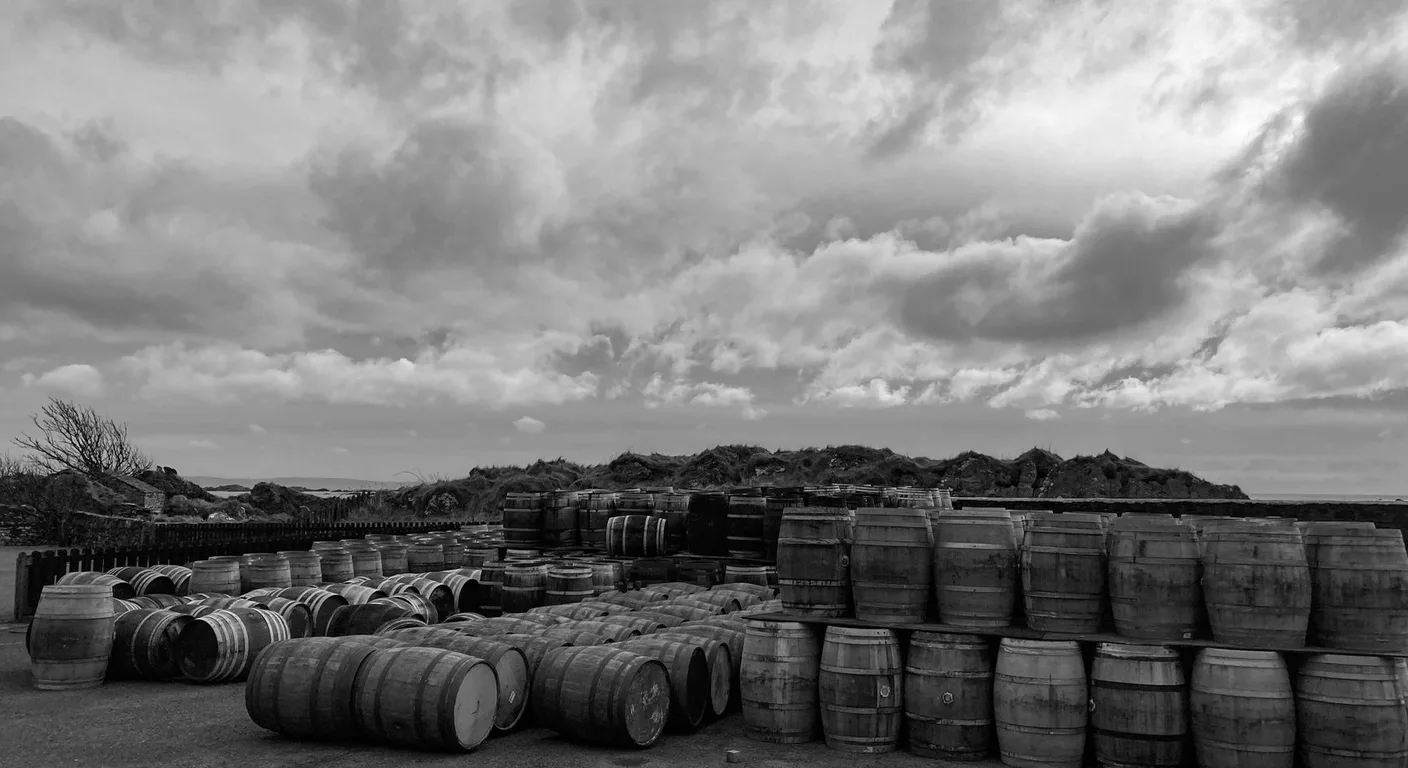
The size of your barrels and the duration of the aging process dictate how long your cash is locked away. A standard 53-gallon barrel typically needs 18 to 24 months just to become palatable. For a fully matured bourbon, distillers generally plan for at least four years of maturation.
Some startup distilleries attempt to speed up cash flow by using smaller barrels. A 15-gallon or 5-gallon barrel has a much higher ratio of wood surface area to liquid. Because of this, small barrels over-wood very quickly. A general operational rule is to allow about 36 days of aging per vessel gallon as a maximum. That means a 5-gallon barrel might be dumped in roughly six months, while a 15-gallon barrel might sit for 15 to 18 months.
While small barrels allow you to dump and sell product faster, they come with a higher cost per gallon for the cooperage. You will spend significantly more on wood to store 53 gallons of whiskey in multiple small barrels than in one full-size barrel. Managing these different vessel sizes efficiently requires specialized barrel management practices to ensure no product is lost to over-extraction.
How do holding costs impact your maturing inventory?
A barrel of whiskey does not just sit in a warehouse for free. Holding costs are the silent expenses that constantly increase your final cost of goods at dump. Every month that a barrel ages, it absorbs a portion of your facility overhead.
These holding expenses include warehouse rent, property taxes, climate control utilities, and commercial insurance. You also have regulatory financial requirements. You must maintain federal and state tax liability bonds to cover the excise taxes due on the spirits you are storing. If you cannot secure a surety bond, you may have to self-fund a cash bond, which can lock up tens of thousands of dollars in operating capital. Please note that this is general educational information and does not constitute legal or tax advice.
Because of these compounding holding costs, a barrel that cost $500 to produce on fill day might carry an actual book value of $800 or more by the time it is dumped four years later. This is why financial veterans in the distilling industry recommend securing a minimum of 1.5 to 3 years of operating capital before opening your doors. Running out of cash while waiting for whiskey to age is the most common reason new distilleries fail.
How does evaporation affect cost of goods at dump?
Evaporation is the most painful physical reality of aged spirits. The natural evaporation of water and alcohol through the porous oak staves is known as the angel's share. This volume loss mathematically guarantees that your cost per proof gallon will be higher at dump than it was at fill.
In a standard 53-gallon barrel, you can expect an angel's share loss of roughly 2 to 3 percent per year. Over a four-year aging period, you will lose a noticeable portion of your initial volume. Small barrels suffer from much more aggressive evaporation. A 5-gallon barrel in dry storage can lose up to 10 percent of its volume in just six months.
When calculating your cost of goods at dump, you must account for this lost liquid. All of the production costs, cooperage costs, and holding costs remain the same, but the total volume of liquid you are pulling out of the barrel has shrunk. Therefore, the cost to produce every remaining drop has increased proportionately.
How do you fund operations while waiting to dump barrels?
Since aging brown spirits creates a massive cash flow gap, successful distilleries develop alternative revenue streams to keep the lights on while their barrels mature. You cannot rely on future whiskey sales to pay today's utility bills.
Many distilleries produce unaged spirits like vodka, gin, and white rum that can be distilled, bottled, and sold in the same week. Others choose to buy wholesale aged whiskey and bottle it under their own label to generate immediate revenue. Tasting rooms and distillery tours also provide high-margin daily income.
Some distillers try to fund their operations by selling barrel pre-sales. If you take this route, be extremely careful not to market them as investment futures, which can trigger strict securities regulations. Instead, structure them as retail layaway programs or club memberships where customers can pick their specific barrel at bottling time.
How do you calculate cost per barrel and cost of goods at dump?
The exact moment of dumping is when your financial calculations become final. When you empty a barrel, you must regauge the spirit to determine the exact volume and proof that survived the aging process. This tells you exactly how many proof gallons you have available to bottle and sell.
To find your final cost of goods at dump, you take the total accumulated cost of the barrel. This includes the initial raw materials, production labor, barrel cost, and all the years of allocated holding costs. You then divide this total accumulated cost by the final number of proof gallons recovered during the dump. If you need assistance with the complex math of gauging and temperature correction, our proof gallon calculator can help you determine your exact final yields.
Finally, you must factor in excise taxes once the product leaves bond for bottling and sale. You can check the latest federal excise tax rates to understand your tax liability. The final number you calculate will give you the true cost per bottle, allowing you to set a wholesale and retail price that ensures your distillery actually makes a profit.
Spirit Sight is a specialized distillery management system designed to track all these complex variables automatically. From mashing and distilling to tracking holding costs and angel's share, Spirit Sight connects your production data with your inventory. This gives you a clear, real-time view of your true cost of goods at dump, helping you make informed financial decisions without relying on guesswork.
Key takeaways
- Initial barrel costs must include raw materials, labor, overhead, and the price of the new cooperage.
- Entering spirits at lower proofs requires more barrels, increasing your upfront cooperage expenses.
- Evaporation significantly reduces final volume, driving up the true cost per proof gallon at dump.
- Operating capital must cover holding costs, insurance, and taxes for years before a return on investment.
- Final cost of goods is calculated by dividing total accumulated expenses by the actual proof gallons recovered at dump.
Frequently asked questions
What is the maximum barrel entry proof for bourbon?
Federal regulations mandate that bourbon must be entered into the barrel at no higher than 125 proof, which is 62.5 percent alcohol by volume. Many distillers choose to enter at lower proofs, such as 110 or 115, to extract different wood sugars.
How much volume does a whiskey barrel lose to evaporation?
A standard 53-gallon barrel typically loses about 2 to 3 percent of its volume per year to the angel's share. Smaller barrels evaporate much faster, sometimes losing up to 10 percent of their volume in just six months.
How long does bourbon need to age in a standard barrel?
Whiskey generally needs 18 to 24 months in a new 53-gallon charred oak barrel to become palatable. Many distillers plan for at least four years to produce a fully matured, well-rounded bourbon.
Why do holding costs matter for aged spirits?
The cost of goods includes the expense of warehousing, insurance, and maintaining a tax bond over several years. These ongoing expenses continually add to the total cost of the barrel until it is finally dumped.
How do you calculate the final cost of a dumped barrel?
You add the initial production costs, the price of the barrel, and all accumulated holding costs together. You then divide that total by the exact number of proof gallons remaining in the barrel after evaporation.